



ADC Linkers
Antibody-drug conjugates linkers
Antibody-drug conjugates (ADCs) consist of a desirable monoclonal antibody, an active cytotoxic drug and an appropriate linker. An appropriate linker between the antibody and the cytotoxic drug provides a specific bridge, and thus helps the antibody to selectively deliver the cytotoxic drug to tumor cells and accurately releases the cytotoxic drug at tumor sites. In addition to conjugation, the linkers maintain ADCs’ stability during the preparation and storage stages of the ADCs and during the systemic circulation period.
The ADCs currently undergoing clinical evaluation contain linkers are mostly classified into two categories: cleavable and noncleavable. Cleavable linkers rely on processes inside the cell to liberate the toxin, such as reduction in the cytoplasm, exposure to acidic conditions in the lysosome, or cleavage by specific proteases within the cell. Noncleavable linkers require proteolytic degradation of the antibody portion of the ADC for release of the cytotoxic molecule, which will retain the linker and the amino acid by which it was attached to the antibody.
The selection of linker is target dependent, based on the knowledge of the internalization and degradation of the antibody-target antigen complex, and a preclinical in vitro and in vivo activity comparison of conjugates. Moreover, the choice of a linker is also influenced by which cytotoxin is used, as each molecule has different chemical constraints, and frequently the drug structure lends itself to a specific linker.
ADC Linkers Isoform Specific Products
-
ADC Linkers
(527)
View all products
-
Cleavable Linker
(445)
View all products
-
Non-cleavable Linker
(205)
View all products
-
Acid Cleavable Linker
(7)
View all products
-
Disulfide Cleavable Linker
(126)
View all products
-
Protease Cleavable Linker
(83)
View all products
-
Glycosidase Cleavable Linker
(6)
View all products
-
Phosphatase Cleavable Linker
(1)
View all products
All Product Categories
-
ADC Linkers Related Products (1199)
Related Products (1199)

-
ADC Linkers Isoform Comparison
-
2-Aminoethyl-mono-amide-DOTA-tris(tBu ester) (Standard)
 0 ImagesCat. No.: HY-100138RCAS No.: 173308-19-52-Aminoethyl-mono-amide-DOTA-tris(tBu ester) (Standard) is the analytical standard of 2-Aminoethyl-mono-amide-DOTA-tris(tBu ester) (HY-100138). This product is intended for research and analytical applications. 2-Aminoethyl-mono-amide-DOTA-tris(tBu ester) is a metal chelator precursor containing a DOTA macrocyclic structure. DOTA can form highly stable complexes with metal ions (such as 68Ga, 177Lu) through four nitrogen atoms and four carboxylic acid groups to mediate targeted delivery of radionuclides. The tert-butyl ester group (tBu ester) of 2-Aminoethyl-mono-amide-DOTA-tris(tBu ester) also protects the carboxylic acid group during synthesis, and forms a free carboxyl group after deprotection reaction for coupling with targeting molecules (such as antibodies, peptides). 2-Aminoethyl-mono-amide-DOTA-tris(tBu ester) may be combined with tumor pre-targeting systems through bioorthogonal reactions (such as reverse electron demand Diels-Alder reaction) to study radioactive imaging or therapy of tumor tissues, and is mainly used in tumor pre-targeting research in the field of nuclear medicine.
-
DecarboxyBiotin-Alkyne
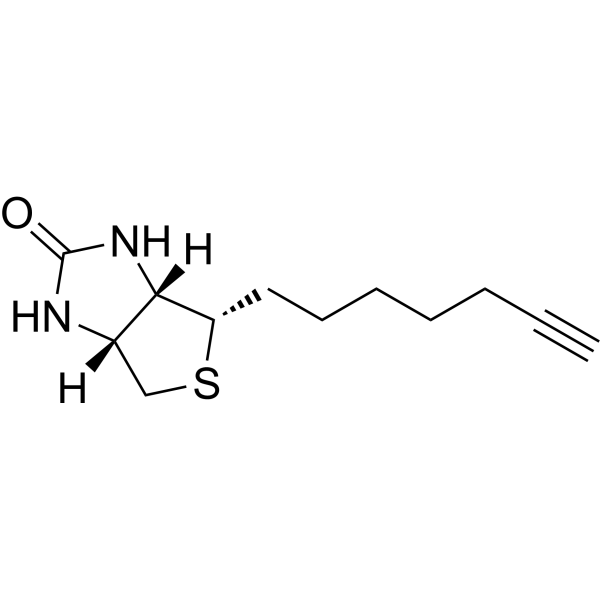 0 ImagesCat. No.: HY-151864CAS No.: 887915-53-9DecarboxyBiotin-Alkyne is a click chemistry reagent containing an azide group. Click chemistry has great potential for use in binding between nucleic acids, lipids, proteins, and other molecules, and has been used in many research fields because of its beneficial characteristics, including high yield, high specificity, and simplicity.
-
Fmoc-L-Lys(Pentynoyl-DIM)-OH
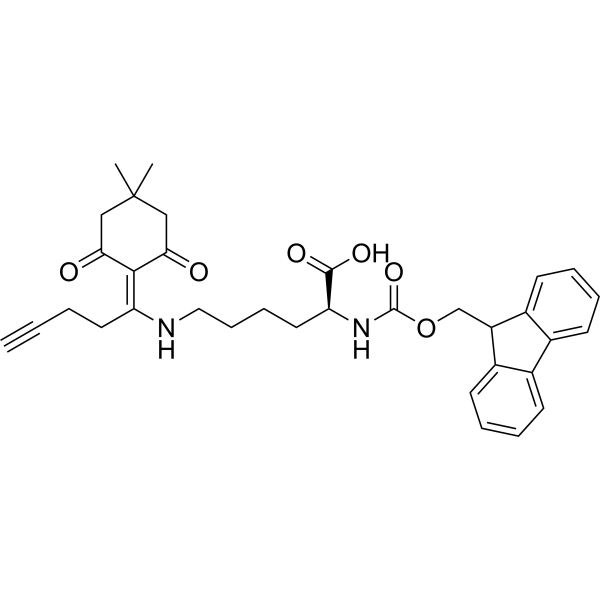 0 ImagesCat. No.: HY-151786CAS No.: 2408993-33-7Fmoc-L-Lys(Pentynoyl-DIM)-OH is a click chemistry reagent containing an azide. Fmoc-L-Lys(Pentynoyl-DIM)-OH can be used as a SPPS building block for the “helping hand” strategy for purification of highly insoluble peptides. Solubilizing residues are attached to the Lys side-chains using Click-chemistry. The solubilizing tag can be removed with 1M hydrazine or hydroxylamine solution. It contains an azide group and can undergo copper-catalyzed azide-alkyne cycloaddition (CuAAc) with molecules containing alkyne groups. It can also undergo ring strain-promoted alkyne-azide cycloaddition (SPAAC) with molecules containing DBCO or BCN groups.
-
N3-L-Lys(Fmoc)-OH
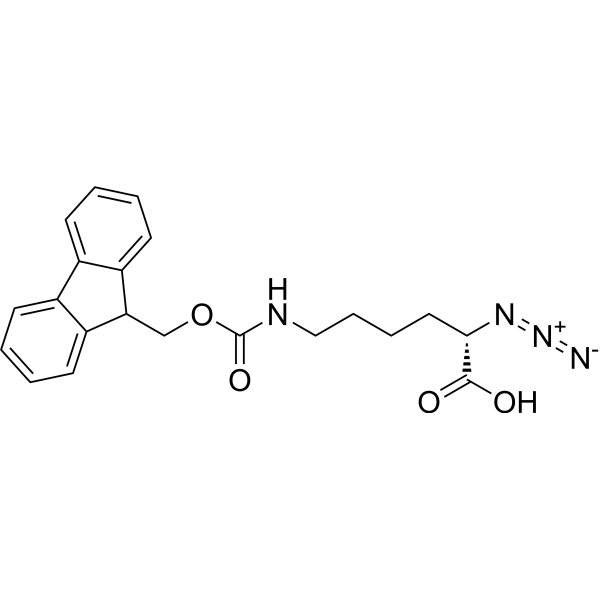 0 ImagesCat. No.: HY-151843CAS No.: 473430-12-5N3-L-Lys(Fmoc)-OH is a non-natural amino acid building block specially designed for solid-phase peptide synthesis and click chemistry. N3-L-Lys(Fmoc)-OH can be used as a linker for ADC (antibody-drug conjugate) or for the development of targeting peptides.
-
Boc-L-Tyr(PEG(3)-N3)-OH
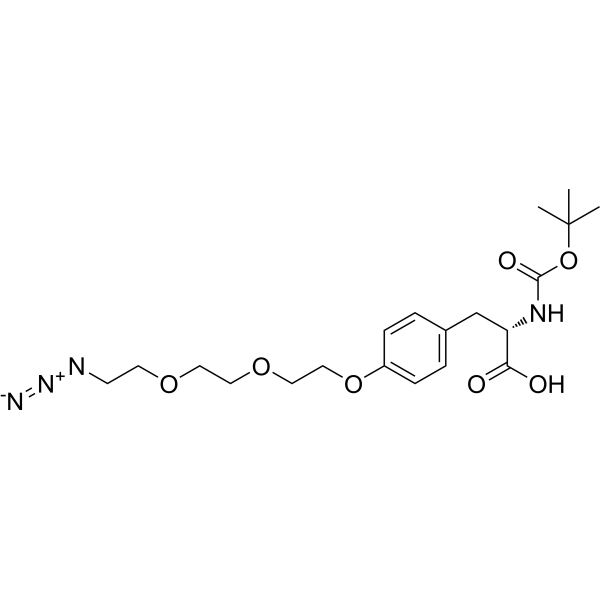 0 ImagesCat. No.: HY-151718CAS No.: 1831059-64-3Boc-L-Tyr(PEG(3)-N3)-OH is a click chemistry agent containing azide. It contains an azide group and can undergo copper-catalyzed azide-alkyne cycloaddition (CuAAc) with molecules containing alkyne groups. It can also undergo ring strain-promoted alkyne-azide cycloaddition (SPAAC) with molecules containing DBCO or BCN groups.
-
cBu-Cit-PAB
 0 ImagesCat. No.: HY-177503CAS No.: 1799660-01-7cBu-Cit-PAB (Compound 13) is a key intermediate of ADC linker. cBu-Cit-PAB can be used for synthesis of antibody-drug conjugates (ADCs).
-
(2R,4S)-H-D-Pro(4-N3)-OH hydrochloride
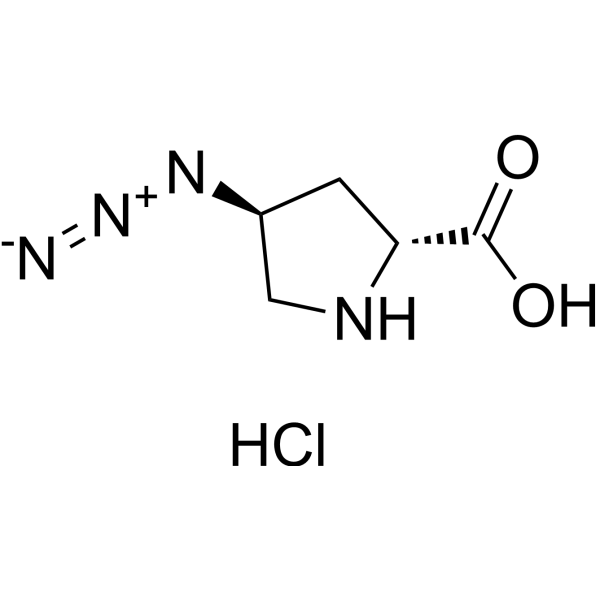 0 ImagesCat. No.: HY-151760A(2R,4S)-H-D-Pro(4-N3)-OH hydrochloride is a click chemistry reagent containing an azide group. It contains an azide group and can undergo copper-catalyzed azide-alkyne cycloaddition (CuAAc) with molecules containing alkyne groups. It can also undergo ring strain-promoted alkyne-azide cycloaddition (SPAAC) with molecules containing DBCO or BCN groups.
-
Mm-C3-OSu
 0 ImagesCat. No.: HY-176893CAS No.: 2410723-30-5Mm-C3-OSu (Methyl Maleate-C3-N-Hydroxysuccinimide Ester) is a structurally defined linker intermediate with a cis-configured methyl maleate (Mm) core and a C3 alkyl chain terminated by an N-hydroxysuccinimide (OSu) reactive group, designed for constructing stable antibody-drug conjugates (ADCs).
-
DACN(Tos,Mal)
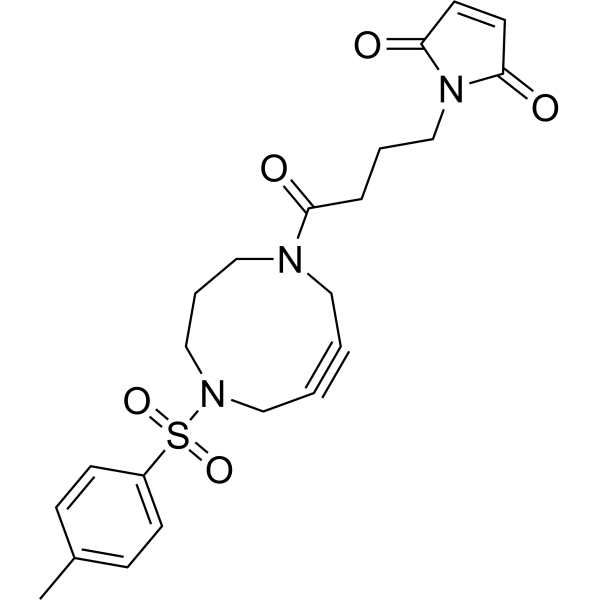 0 ImagesCat. No.: HY-151771CAS No.: 2411082-28-3DACN(Tos,Mal) is a click chemistry reagent containing an azide. DACN(Tos,Mal) possess high thermal and chemical stability along with comparable click reactivity.
-
NH2-PEG6-Val-Cit-PAB-OH
 0 ImagesCat. No.: HY-W800620CAS No.: 2055024-60-5NH2-PEG6-Val-Cit-PAB-OH is a cleavable ADC linker featuring a primary amine, a hydrophilic PEG spacer, a Val-Cit dipeptide, and a PAB group. The benzylic alcohol on the PAB can be used to attach with reactive groups such as PNP for conjugation with drug payloads. The primary amine is free to perform a wide variety of reactions such as coupling with carboxylic acids, reductive aminations with ketones or aldehydes, or other more specialized uses such as in SNAr reactions or heterocyclic chemistry. The Val-Cit dipeptide is cleaved by cellular proteases within the cell to allow for efficient payload delivery via an elimination mechanism within the PAB structure.
-
SCO-PEG7-Maleimide
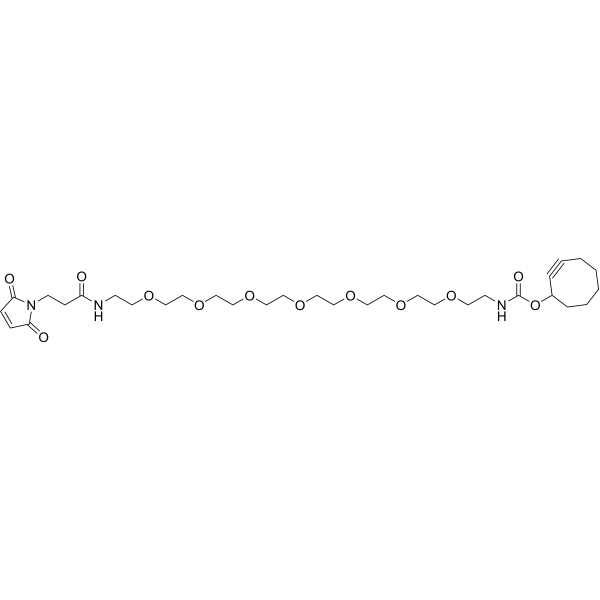 0 ImagesCat. No.: HY-156321CAS No.: 2143968-81-2SCO-PEG7-Maleimide is a cleavable ADC Linker containing 3 PEG units. SCO-PEG7-Maleimide can be used as a copper-free click chemical reagent for catalyst-free click reactions. Its maleimide group (-Maleimide) degrades in aqueous media and has been used in drug delivery studies.
-
BCN-exo-PEG8-NHS
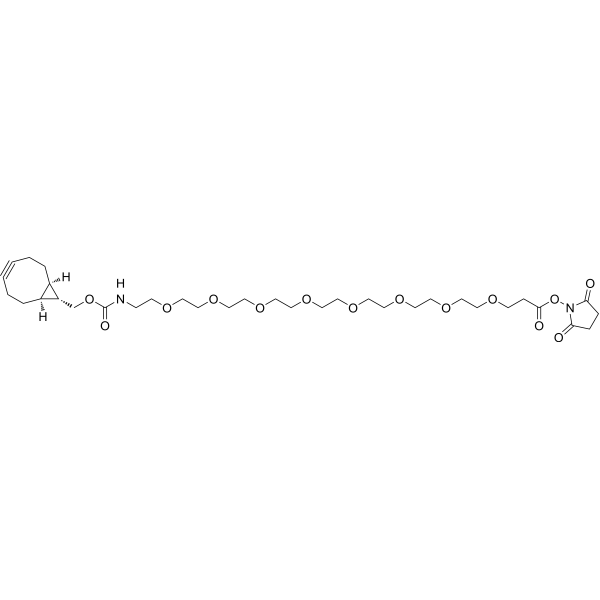 0 ImagesCat. No.: HY-156324BCN-exo-PEG8-NHS is an ADC Linker containing 8 PEG units. BCN-exo-PEG8-NHS contains the lyophilic bidentate macrocyclic ligand BCN, which allows for further synthesis of macrocyclic complexes. In click chemistry, BCN reacts with molecules containing azide groups to form stable triazoles in the absence of catalysts.
-
N3-L-Dab(Boc)-OH
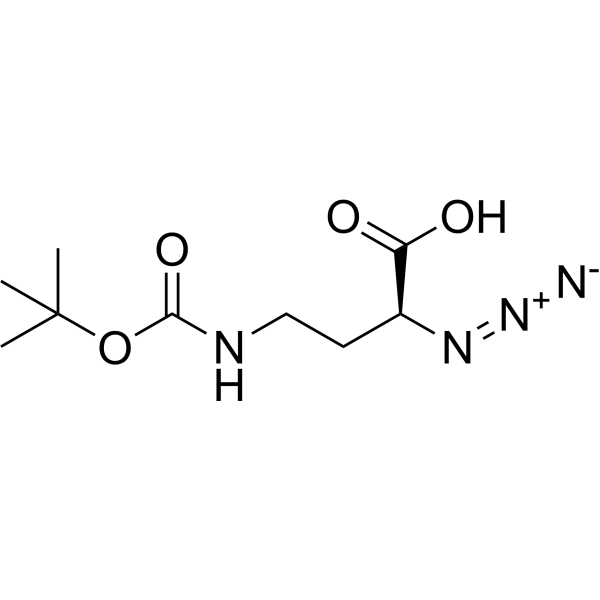 0 ImagesCat. No.: HY-151735CAS No.: 1932403-71-8N3-L-Dab(Boc)-OH is a click chemistry reagent containing an azide group. N3-L-Dab(Boc)-OH can be used for the research of various biochemical. It contains an azide group and can undergo copper-catalyzed azide-alkyne cycloaddition (CuAAc) with molecules containing alkyne groups. It can also undergo ring strain-promoted alkyne-azide cycloaddition (SPAAC) with molecules containing DBCO or BCN groups.
-
Boc-L-Phe(4-NH-Poc)-OH
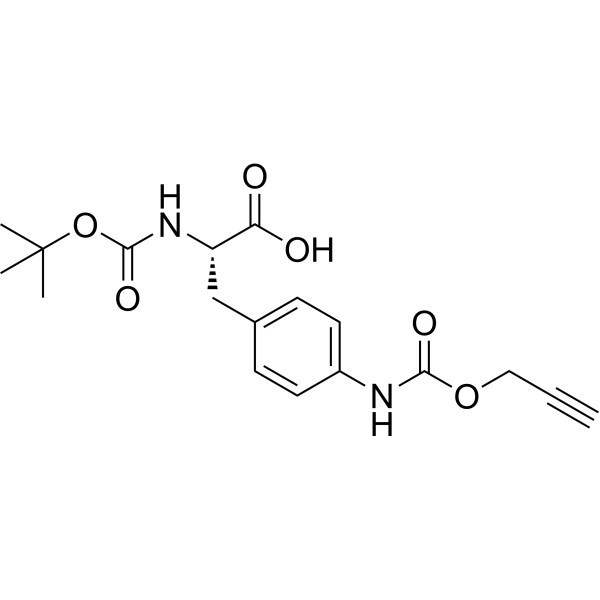 0 ImagesCat. No.: HY-151824CAS No.: 2576508-03-5Boc-L-Phe(4-NH-Poc)-OH is a click chemistry reagent containing an azide group. Used as an orthogonally protected building block in peptide synthesis. Propargyloxycarbonyl, commonly abbreviated as Poc or Pryoc, can either be used as alkyne component for standard Click conjugation or in combination with tetrazine linkers in copper-free Diels-Alder type Click reactions. It also has applications as unusual protecting group for amines, hydroxy functions and as esters. All 3 are stable to neat TFA, but can be cleaved at ambient temperature with Co2(CO)8 in TFA:DCM. Deprotection with other transition metals like palladium have also been reported. Boc-L-Phe(4-NH-Poc)-OH is a click chemistry reagent, it contains an Alkyne group and can undergo copper-catalyzed azide-alkyne cycloaddition (CuAAc) with molecules containing Azide groups.
-
Norbornene-methyl-NHS
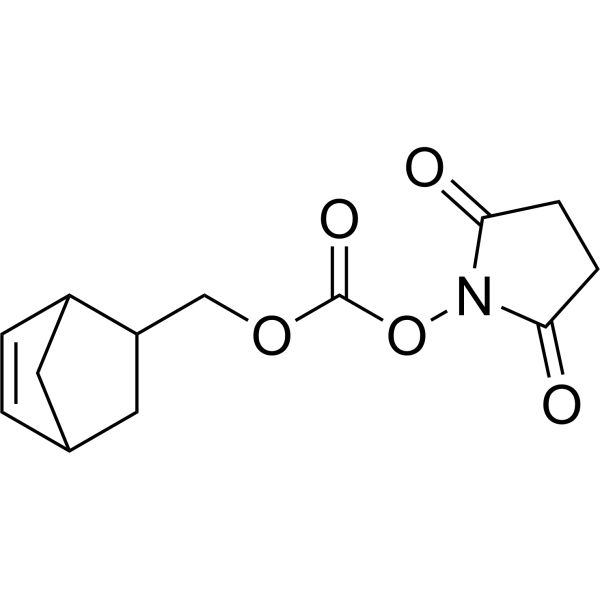 0 ImagesNorbornene-methyl-NHS is a norbornene-based antibody-drug conjugate linker (ADC Linker) bearing methyl and NHS ester functional groups, which can be used for specific antibody conjugation. Norbornene-methyl-NHS is also a click chemistry reagent containing a TCO group, acting as a dienophile for conjugation via the Diels-Alder reaction, namely the copper-free click reaction with tetrazine.
-
H-L-Dbu(N3)-OH
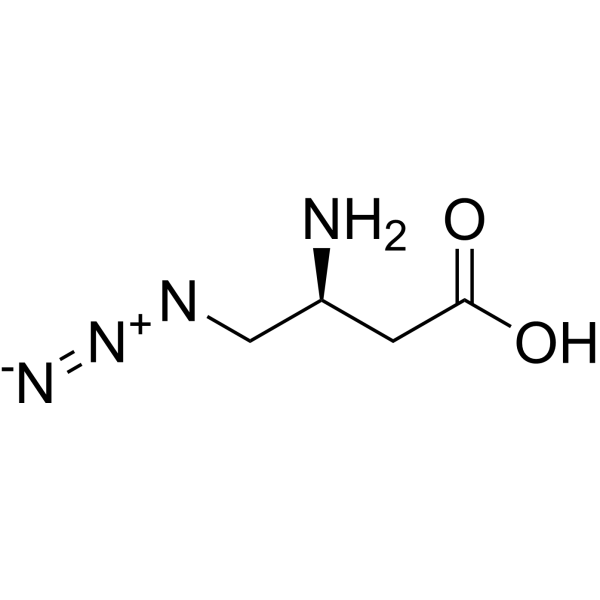 0 ImagesCat. No.: HY-151785CAS No.: 2389078-78-6H-L-Dbu(N3)-OH is a click chemistry reagent containing an azide group. It contains an azide group and can undergo copper-catalyzed azide-alkyne cycloaddition (CuAAc) with molecules containing alkyne groups. It can also undergo ring strain-promoted alkyne-azide cycloaddition (SPAAC) with molecules containing DBCO or BCN groups.
-
Biotin-C2-S-S-pyridine
 0 ImagesCat. No.: HY-135928CAS No.: 112247-65-1Biotin-C2-S-S-pyridine is a cleavable ADC linker. Biotin-C2-S-S-pyridine can be used in the synthesis of antibody-drug conjugates (ADCs).
-
N3-Pen-Dde
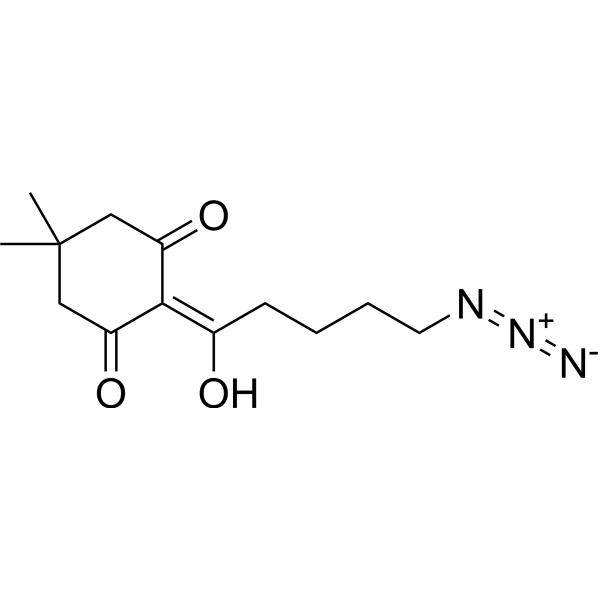 0 ImagesCat. No.: HY-151724CAS No.: 1867129-38-1N3-Pen-Dde is a click chemistry reagent containing an azide group. It contains an azide group and can undergo copper-catalyzed azide-alkyne cycloaddition (CuAAc) with molecules containing alkyne groups. It can also undergo ring strain-promoted alkyne-azide cycloaddition (SPAAC) with molecules containing DBCO or BCN groups.
-
Fmoc-Abg(N3)-OH
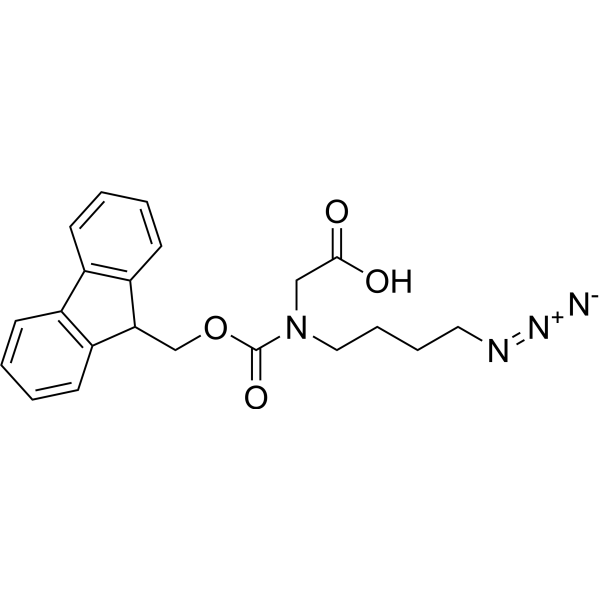 0 ImagesCat. No.: HY-151778CAS No.: 2250433-81-7Fmoc-Abg(N3)-OH is a click chemistry reagent containing an azide group. Fmoc-Abg(N3)-OH has the potential to synthesize peptide nucleic acids (PNA) and peptoids. It contains an azide group and can undergo copper-catalyzed azide-alkyne cycloaddition (CuAAc) with molecules containing alkyne groups. It can also undergo ring strain-promoted alkyne-azide cycloaddition (SPAAC) with molecules containing DBCO or BCN groups.



